
We accept charter school funding from : Compass Charter School, Cabrillo Point Academy, Sky Mountain Charter School, iLEAD, and Taylion High Desert Academy
SPRING 2025

Field Notebook Techniques and Ornithology — Spring 2025
Session 1: February 5 – March 19
Session 2: March 26 – May 7
Grades 3 – 12
$200 per session
Field Notebook Techniques and Ornithology is structured with one hour of classroom time and one 75 minute outdoor experience every week for 6 weeks. The classroom time will focus on covering the nature journaling techniques as outlined in How to Teach Nature Journaling by John Muir Laws and the study of birds with eBird Explorers curriculum. The students will learn new field notebook techniques each week before our outdoor experience where they will put their new methods into practice. We will also sharpen our binocular skills and practice detailed observation of wildlife. Class meets at The Back Bay Science Center 600 Shellmaker Road, Newport Beach, CA.
FALL 2025
Field Ornithology — Fall 2025
Session 1: Wednesdays, September 3 – October 15
Session 2: Wednesdays, October 22 – December 3
Grades 9 – 12
$250 per session
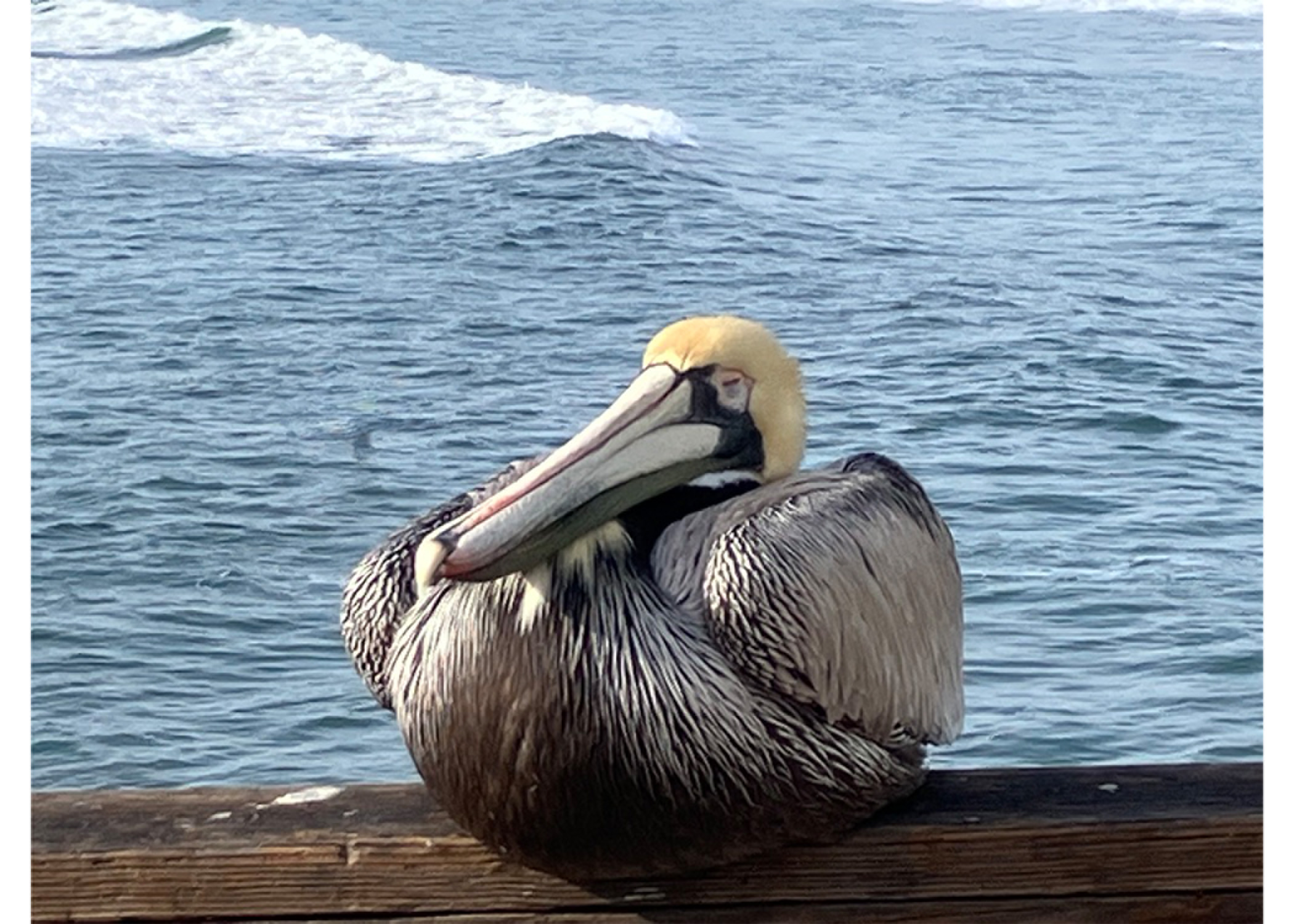
This class covers several ornithological topics including: visual and audible bird identification, habitat, adaptations, migration, and anatomy, with an emphasis on field research for the purpose of participating in a citizen science research project hosted by Cornell University’s Lab of Ornithology. We will be spending one hour of lecture and 75 minutes of outdoor lab research each week. The classroom time will focus on covering the study of birds with eBird Explorers curriculum. Grading and final research project are available upon request. Location TBD.

Field Notebooks and Data Collection — Fall 2025
Session 1: Wednesdays September 3 – October 15
Session 2: Wednesdays October 22 – December 3
Grades 9 – 12
$250 per session
Learn two methods that scientists use to record the interesting observations they make outside. We will study the nature journal method and the Grinnell Method of note taking as we make our own methodical observations of all the interesting occurrences we notice in the field. Both methods are designed to aid scientific investigation and are commonly used by professional biologists and field naturalists. We will explore many techniques of recording our outdoor observations and will focus on accuracy of observation and usefulness of the notebook. You don’t need to be an artist or a naturalist to begin. This genuine use of an authentic scientific method helps students understand what science is and to think of themselves as scientists. Grading and final research project are available upon request. Location TBD.

All About Oak Trees — Fall 2025
Session 1: Tuesdays, September 2 – October 14
Session 2: Tuesdays, October 20 – December 2
Grades 7 – 12
$250 per session
Discover the ecological importance of oak trees in the California ecosystem. This keystone species harbors more life forms than any other North American tree from fungi, to insects, to birds, to mammals. Oaks are some of the oldest trees in the world routinely hitting 1,000 years old! Join us as we examine the preeminence of the oak tree as fundamental to a healthy wildlife community, oak trees as a wildlife food source, how to age a tree without cutting it, the oak community and how this ecosystem has changed over time, oak galls and their many uses, wildfire and how oaks benefit, how oaks germinate and how to plant them, and of course native American uses and dependence on the acorn. We will be spending one hour of lecture and one and a half hours of outdoor lab research each week. Grading and final research project are available upon request. Class meets at Oak Canyon Nature Center, 6700 East Walnut Canyon Road, Anaheim.

Hiking the Hidden Wilderness of OC — Fall 2026
Grades 4 – 12
Session 1: Fridays, September 5 – October 17
Session 2: Fridays, October 24 – December 5
$250 per session
Let’s get out there and hit the trail for a guided expedition! Join S Bar S Outdoor Education as we explore the local, hidden wilderness in Orange County. Class meets once weekly for six weeks at different local hiking trails. We will learn hiking and wilderness skills as well as something about the plants, animals, and history of our county as we go. It’s a great way to go outside and grow!
SPRING 2026

Rocky Intertidal Monitoring – Spring 2026
Grades 11 – 12
Learn biological field research techniques while studying the health of our coastal rocky intertidal zones. This class covers research techniques such as vertical transects, quadrat samples, total counts and recording field conditions. We will learn these techniques and apply them to studying the populations of 27 groups of common and abundant algae and invertebrates in our coastal tidal zones. Our emphasis will be to gather data in the field for the purpose of participating in a citizen science research project hosted by LiMPETS (Long-term Monitoring Program and Experiential Training for Students). 14 weeks. We will be spending one hour of lecture and one and a half hours of outdoor lab research each week. Grading and final research project are available upon request.

Mole Crab (Emerita analoga) Monitoring – Spring 2026
Grades 9 – 12
Learn biological field research techniques while studying the health of our sandy beaches by evaluating the mole crab population. This class teaches research techniques such as vertical transects, core sampling, and recording field conditions. Our emphasis will be to gather data in the field for the purpose of participating in a citizen science research project hosted by LiMPETS (Long-term Monitoring Program and Experiential Training for Students). 14 weeks. We will be spending one hour of lecture and one and a half hours of outdoor lab research each week.